
Trader's Bookshelf: Secrets of a Pivot Boss
There's a specific kind of tired that only comes from a bad trading day you can't explain. Not the kind where you were wrong and you know why — the kind where the market ripped higher, you had no real read on why, it reversed an hour later, and you still had no real read on why. You go back that evening and build a story that fits both moves. It always fits. It's supposed to — you wrote it after already knowing the answer. That's not analysis, that's narration, and I did a lot of it before I found this book.
The fix I kept reaching for was the wrong one: another indicator. Another oscillator promising confirmation, another moving average promising a cleaner signal, stacked on top of the last thing that hadn't worked either. Every one of them felt like progress for about two weeks. None of them changed the actual problem, which was that I had no idea what to expect from a session before it started. Every single morning was starting from zero, and starting from zero, every day, is exhausting in a way that has nothing to do with how many hours you put in.
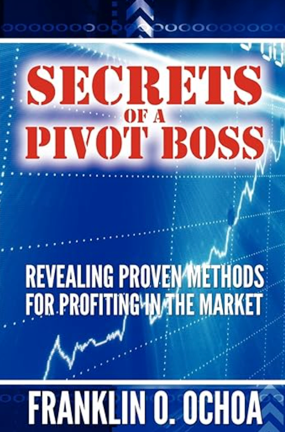
Frank Ochoa's Secrets of a Pivot Boss: Revealing Proven Methods for Profiting in the Market is the book that actually broke that cycle, and years later it's still the one trading book I keep open instead of shelved.
What it gives you isn't a signal, it's a lens — a way of reading, before the session even opens, where price is likely to accept or reject. I remember exactly what changed for me: the first morning I actually calculated a narrow CPR before the open and watched the day trend the way a narrow CPR is supposed to suggest it might. It wasn't magic and it wasn't certainty — it was the first time I'd walked into a session already knowing roughly what kind of day I was dealing with, instead of finding out the hard way an hour into it.
The core of it is the Central Pivot Range — a three-level structure built from the prior session's high, low, and close, deceptively simple on paper. Ochoa spends most of the book showing how CPR width and slope telegraph whether a day is going to trend or chop, well before the open. It never promises certainty, and that omission is exactly what earned my trust — every other book I'd read up to that point was implicitly promising an edge that didn't exist. This one just describes the market honestly and hands you a way to frame the uncertainty instead of pretending it isn't there.
That's the part that actually changed things, if you've been through the same exhausted evenings I have: the fix was never a better prediction. It was permission to stop expecting certainty and start expecting a range of likely behavior instead. Once that shift happened, the reversals stopped feeling like personal betrayals from the market and started feeling like one of a few outcomes I'd already priced in before the session began.
Years on, the reason it's still on my desk while a lot of other trading books have quietly aged out of relevance is that CPR comes directly from price itself, not some overlay of assumptions about how markets "should" behave. It's not fitted to a particular market regime, so it hasn't broken the way regime-dependent tools eventually do. I built the framework I run every morning on top of what's in this book, and I'm still refining it, not replacing it.
Whatever instrument you're actually trading, if you know that specific tired — moving with the market but never understanding it, indicator-hopping in search of the one that finally works — skip the hunt and read this instead. It won't give you a signal. It'll give you something better: a way to actually see the session before it starts, and to walk in already knowing what to expect from it.
If you want to see where this actually led, my Trading Framework post walks through the full CPR, pivot, and order flow setup I run every morning, built directly on top of what this book taught me.
Of every trading book I've read, this is still the highest-ranked one on my shelf — and it won't be the last book review here. More on the trading books that actually earned a spot on that shelf, coming soon.
— Shak